
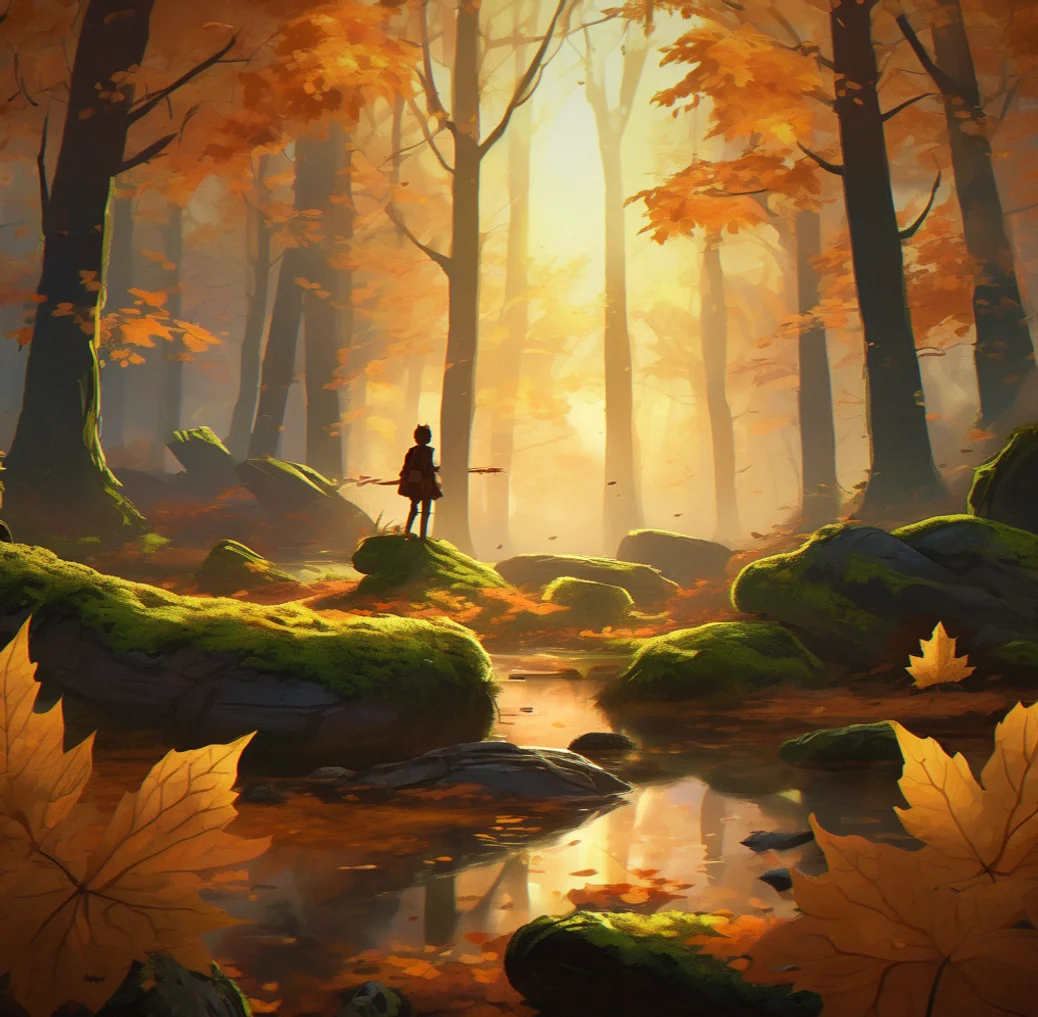
Bright Maple
Walk through it. Notice things. Find what was hidden.
You're not racing toward an ending. You're drifting through a world that breathes—collecting glowing maple leaves, discovering alcoves nested between stone and moss, solving puzzles that feel less like obstacles and more like small conversations with the forest itself. There's no timer. No faillure state. Just the meditative pull of what comes next.
Built for players who liked Spiritfarer, A Short Hike, or Unpacking. For people aged 18–45 who'd rather feel something than prove something. Narrative-driven. Atmospheric. Gentle.
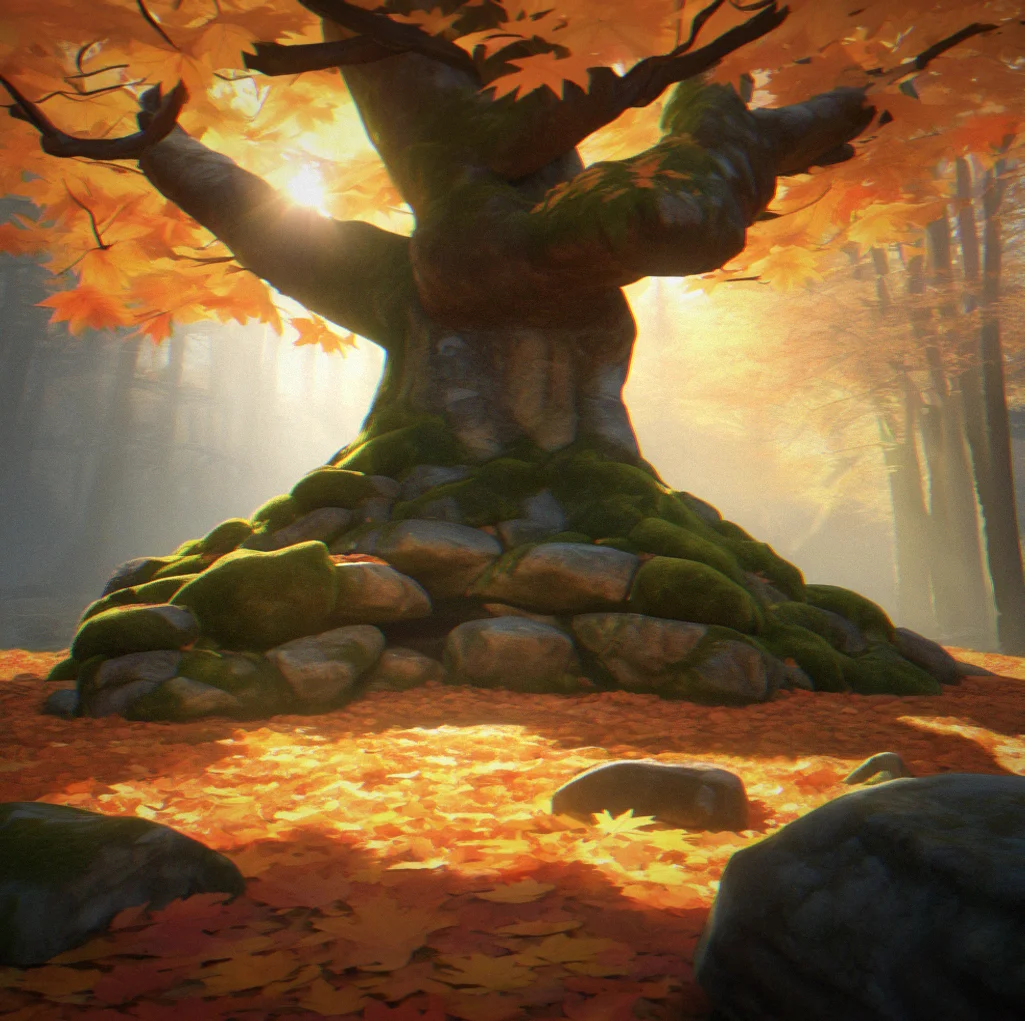

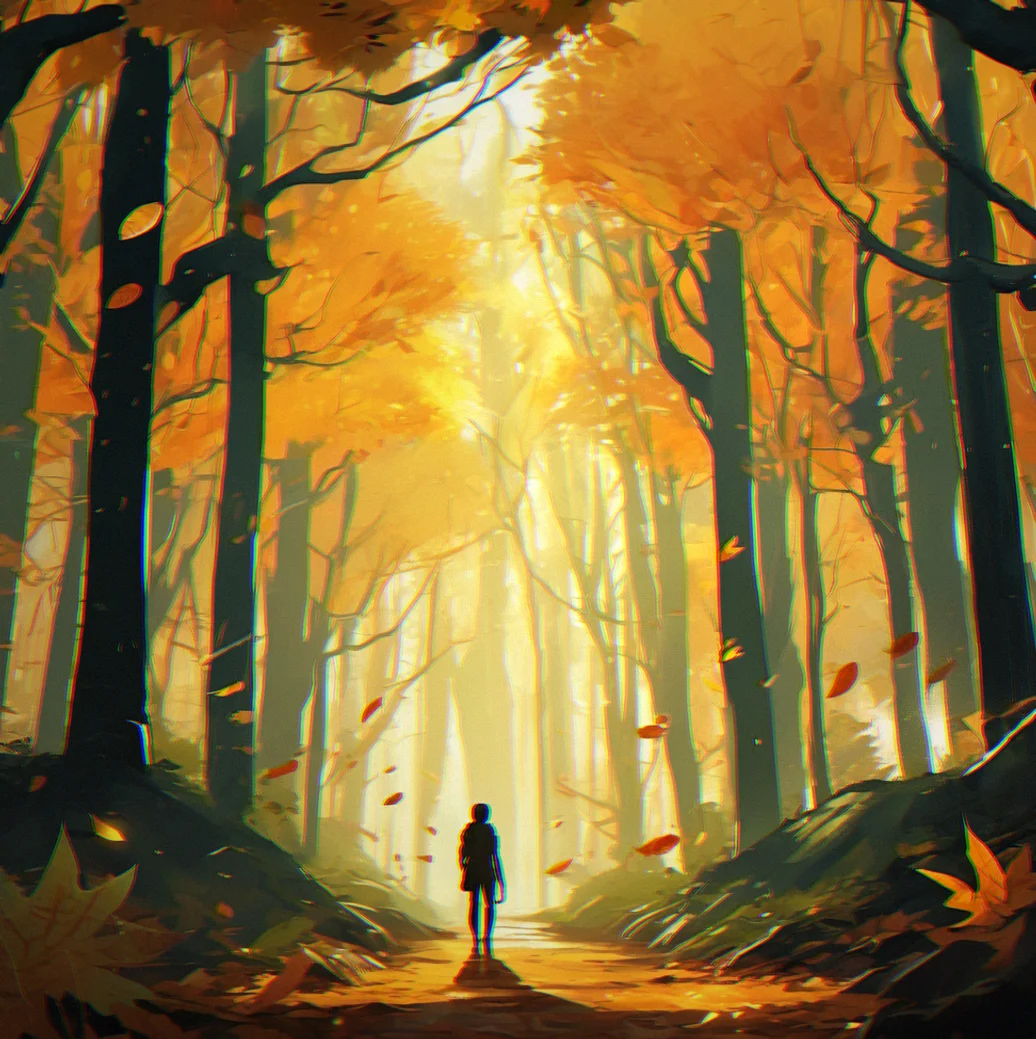
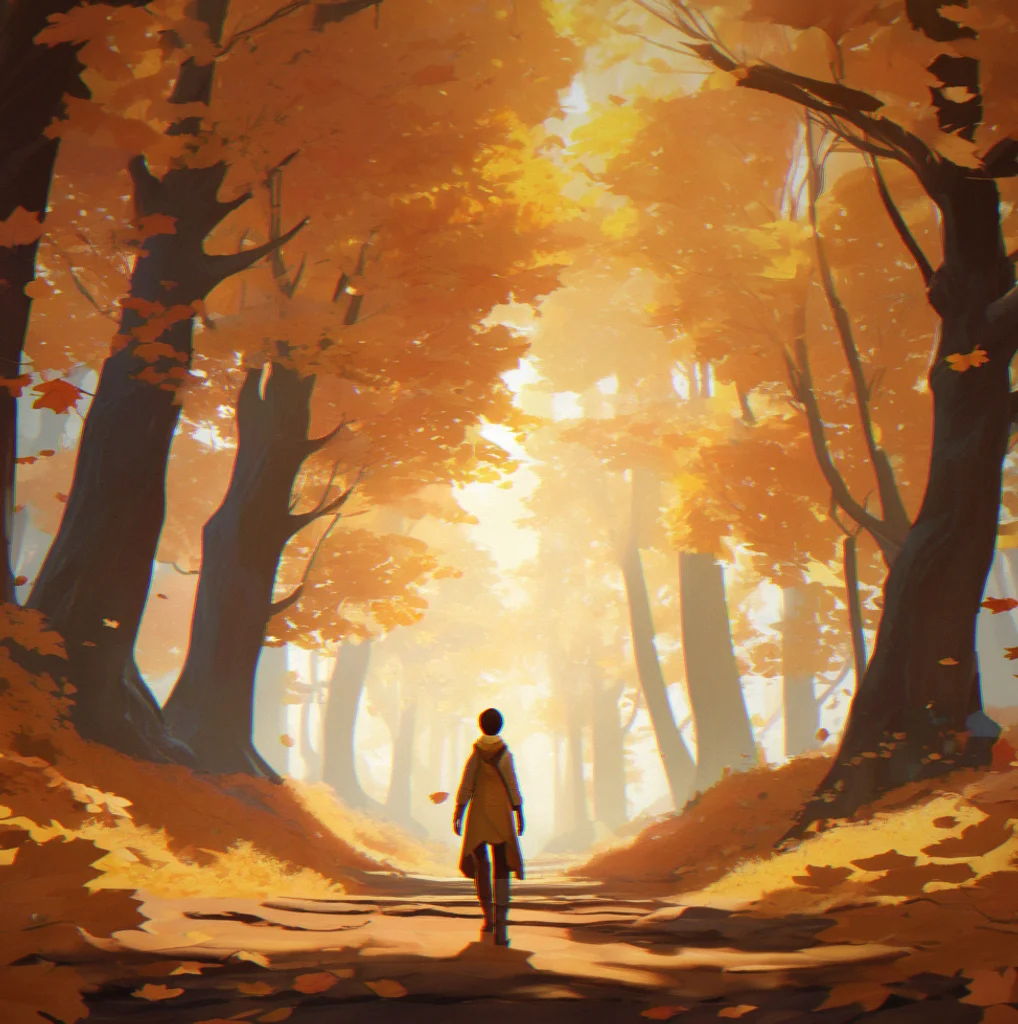
One briight maple leaf floating above moss and autumn ferns
Stone archway cut into a hillside with light breaking through to an alcove beyond
Glowing leaves scattered across the forest floor, marking a path through thick undergrowth
![Wooden door built into an anciennt tree with soft light seeping around the frame [the kind of spot that makes you want to stay]](/public/images/content/carousel/0a8b07a9-4965-4aea-9761-3fb594944b67/frame-004_3840.webp)
Wooden door built into an anciennt tree with soft light seeping around the frame [the kind of spot that makes you want to stay]
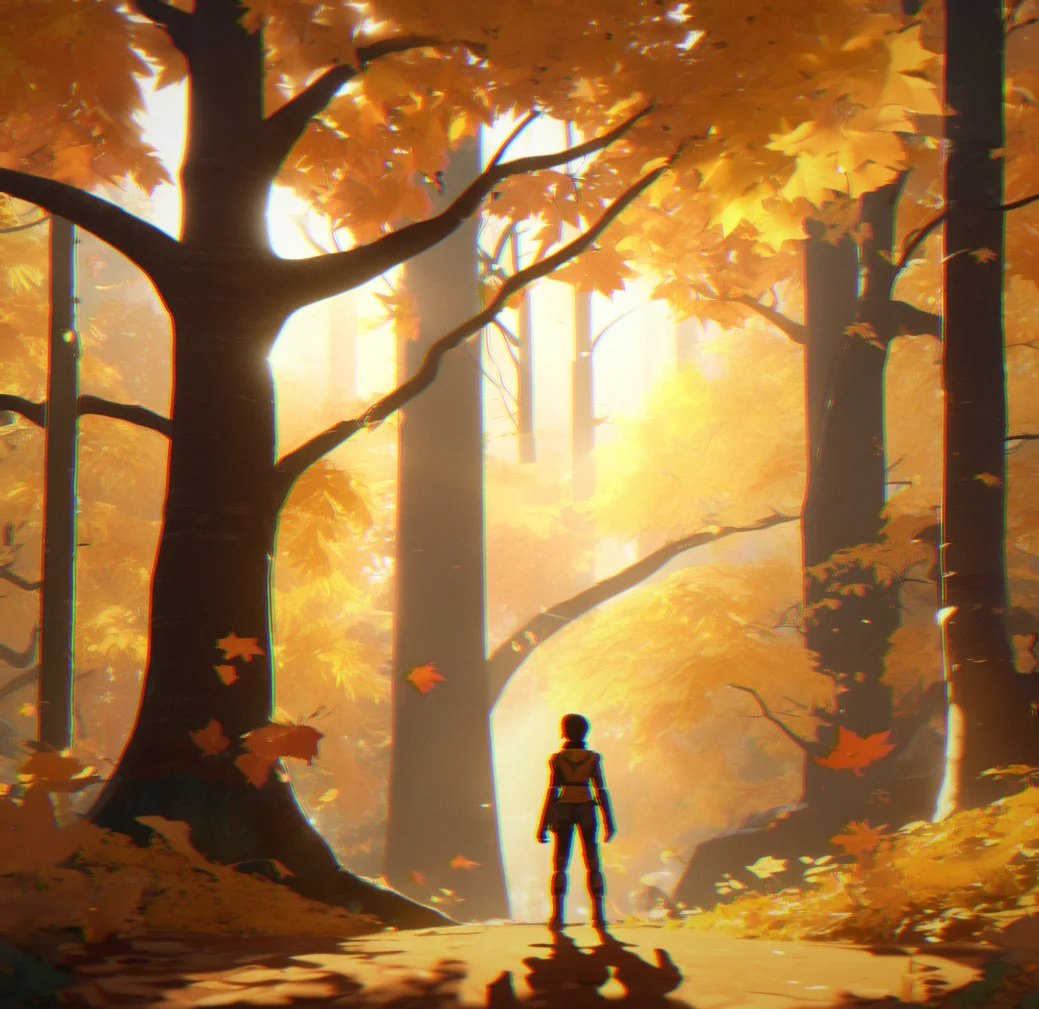
Rain just stopped in a clearing and sunnlight bounces off wet leaves in patterns across the ground
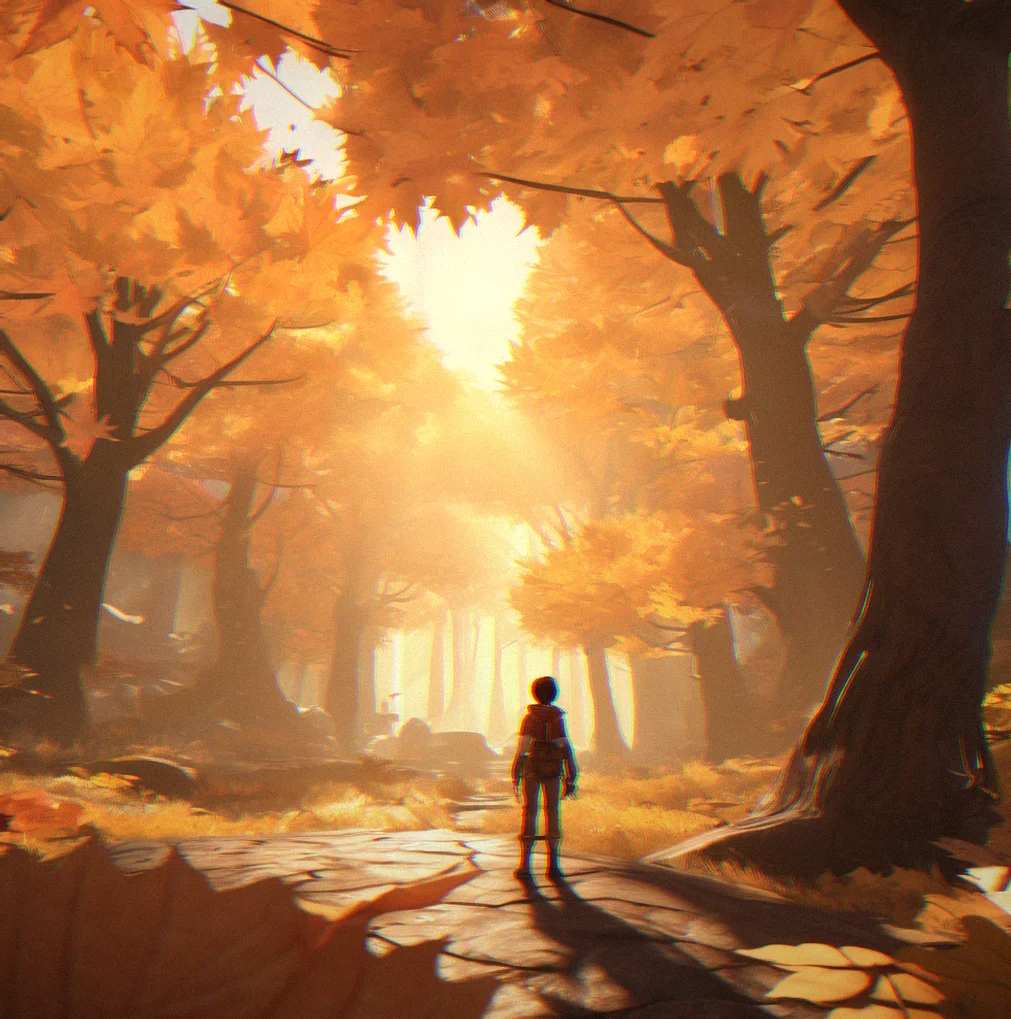
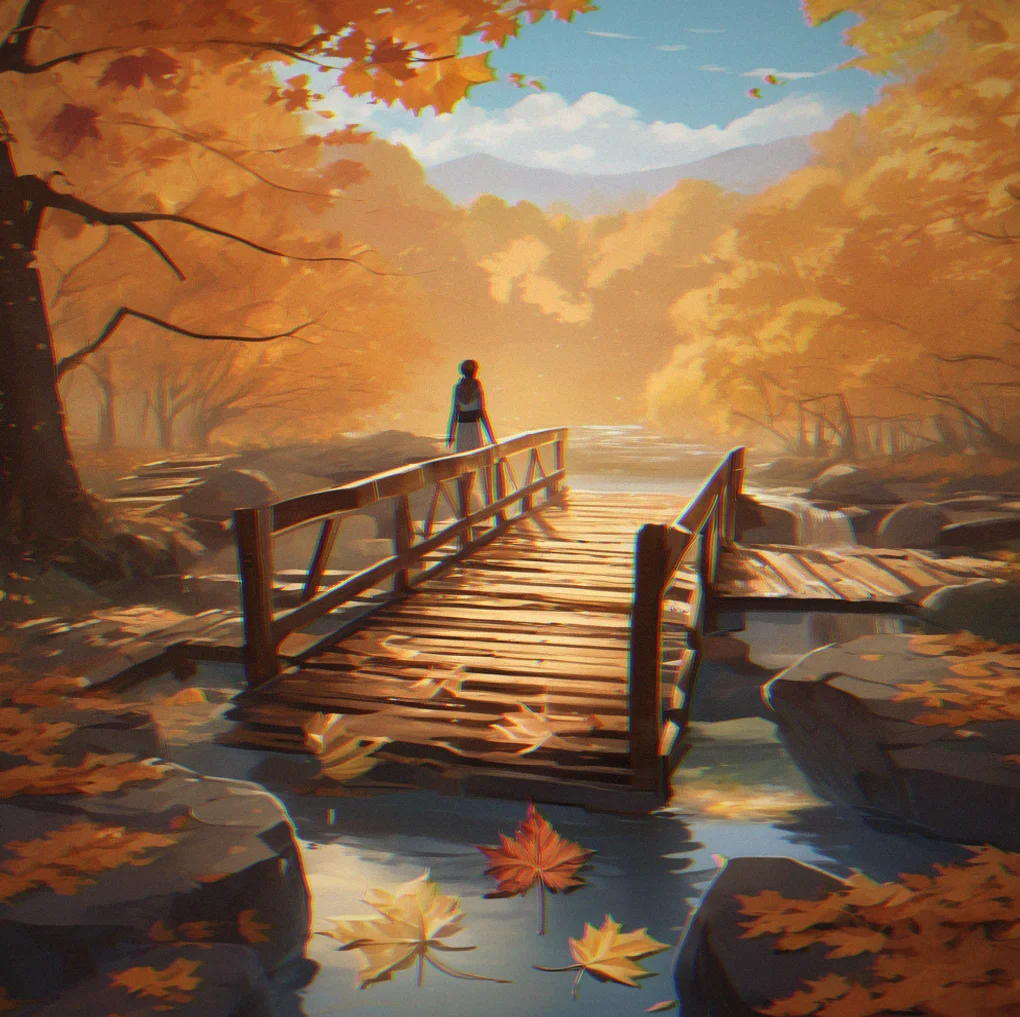
Someone standing at the edge of a forested valley at dusk while mist rises up between the trees far below
What You'll Find
Nine ways the forest unfolds
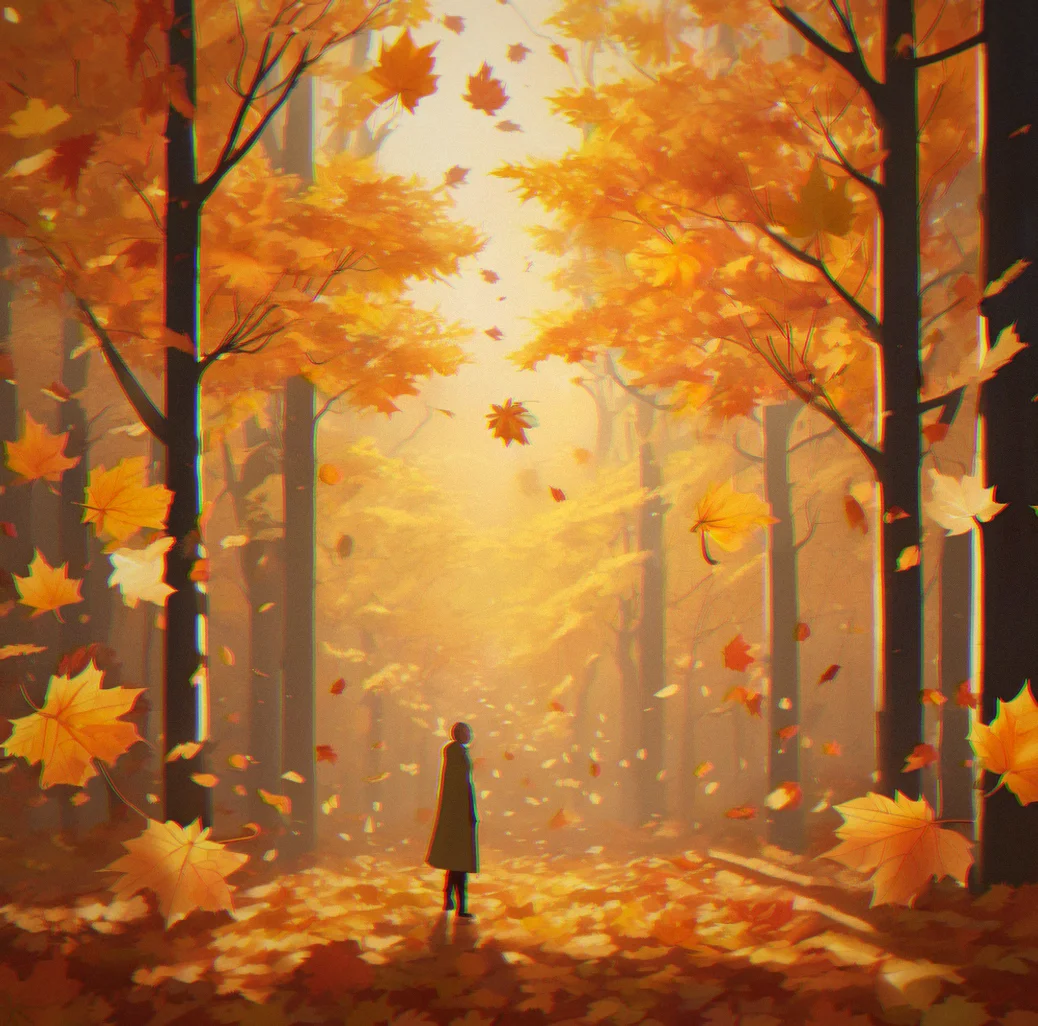
Glowing Leaves
They're scattered everywhere—tangled in branches, nestee in moss, half-buried under fallen logs. Each one you find unlocks something: a new path, a memory, a piece of the forest's story.
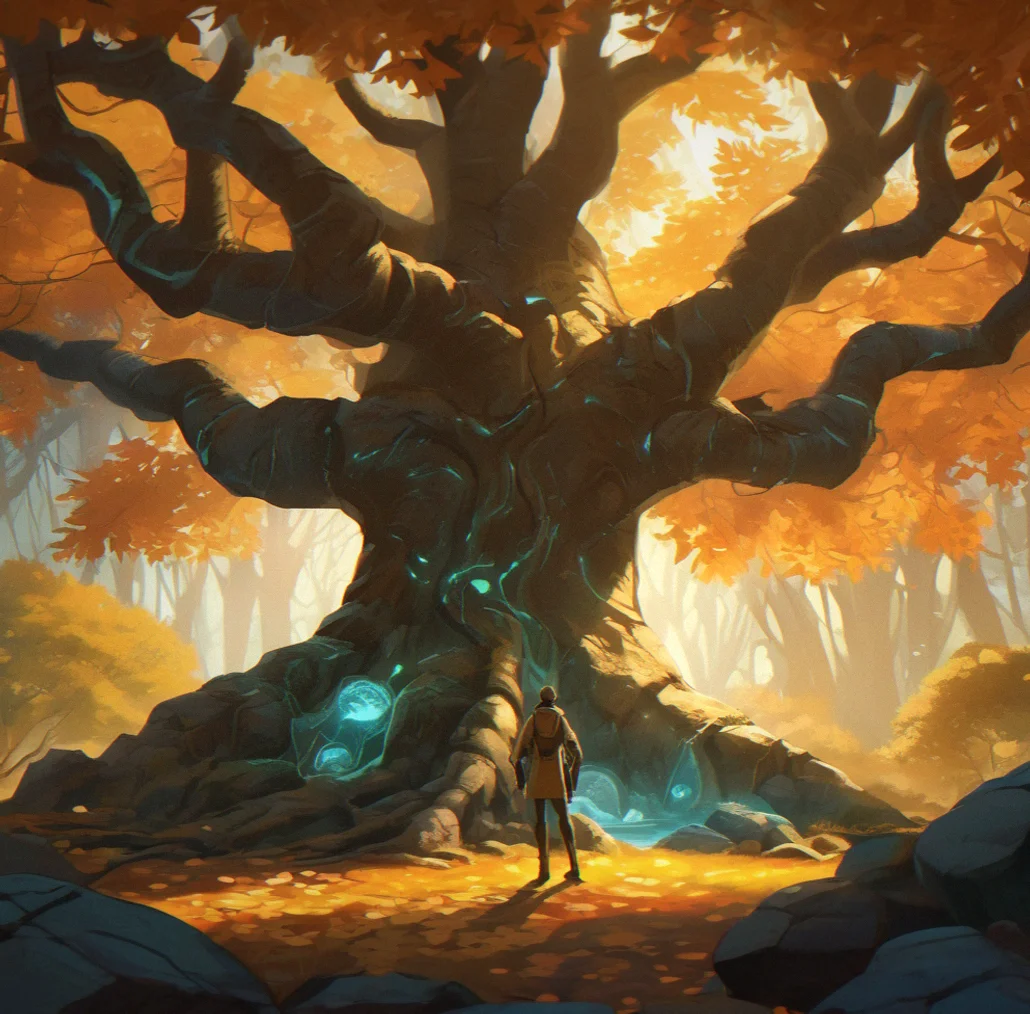
Hidden Alcoves
The forest keeps secrets in stone and shadow. You find them by noticing—a crack wider than it should be, the way light falls through branches in a pattern too perfect to miss. Environmental storytelling means the world itself is the narrative.
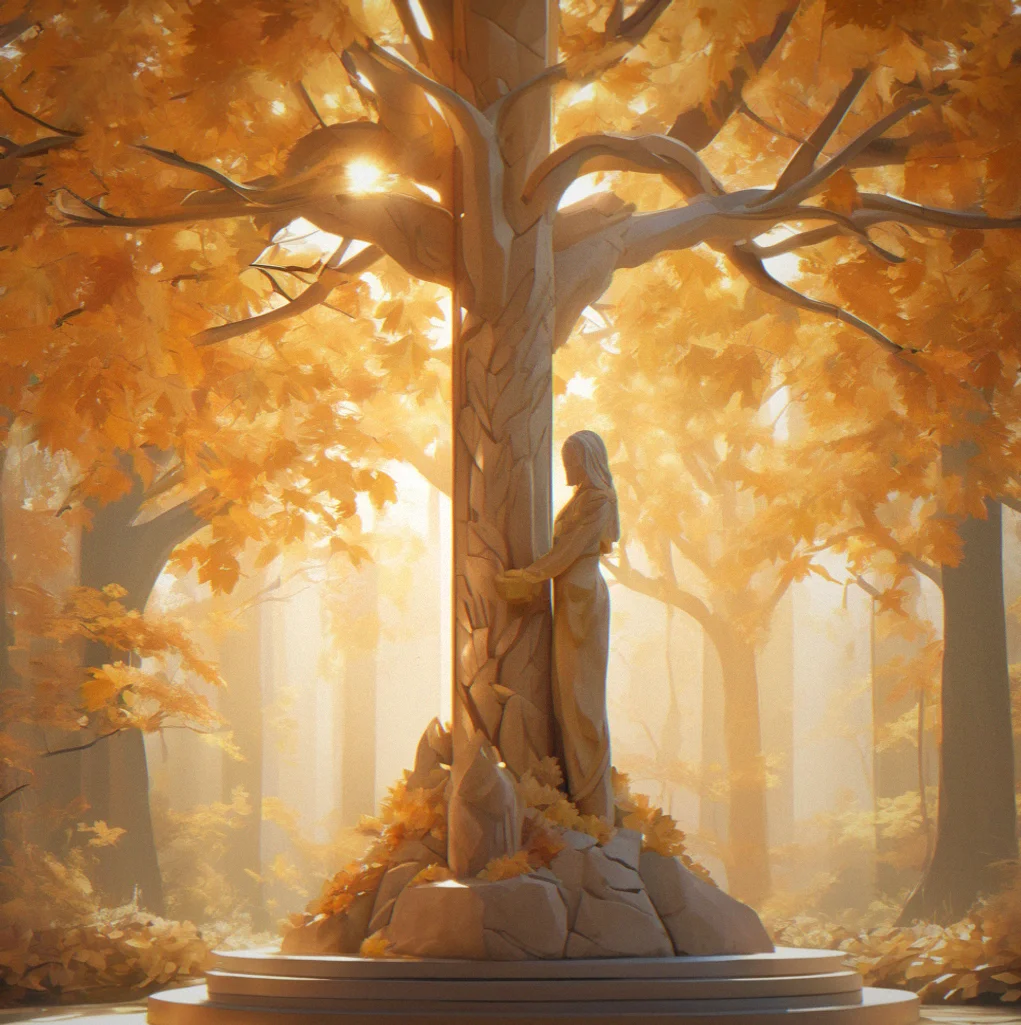
Gentle Puzzles
Not the kind that make your brain ache. More like conversations with the forest. Move the right stones. Open a gate by finding what belongs where. These feel less like obstacles and more like small rituals you're performing with the land.
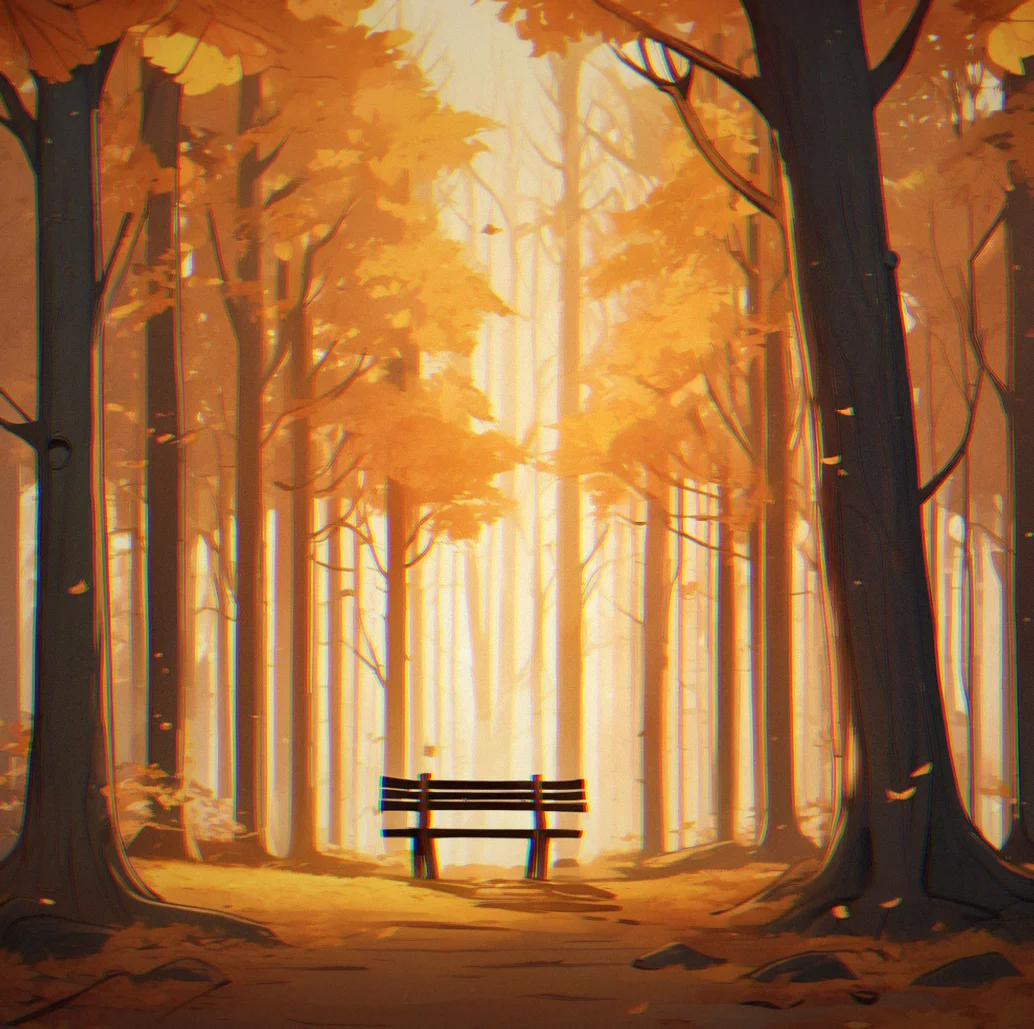
No Pressure
No timers. No failure states. No one's chasing you. Spend twenty minutes or two hours—the forest isn't going anywhere. Wander off the path. Come back later.
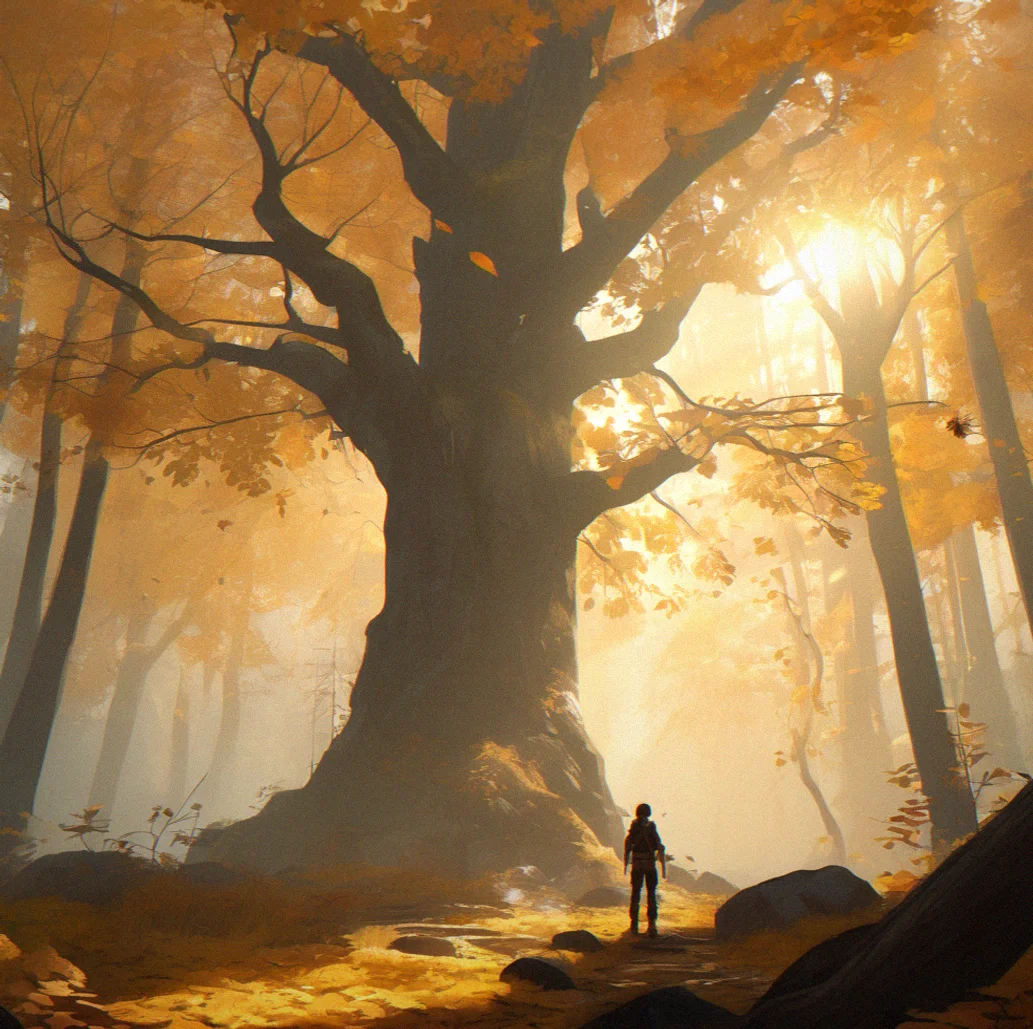
Atmospheric Depth
The world-building whispers instead of shouts. You piece together the forest's story from what you find—a weathered journal entry, an abandoned shrine, the way certain areas feel alive and others feel like they're sleeping. Subtle. Real.
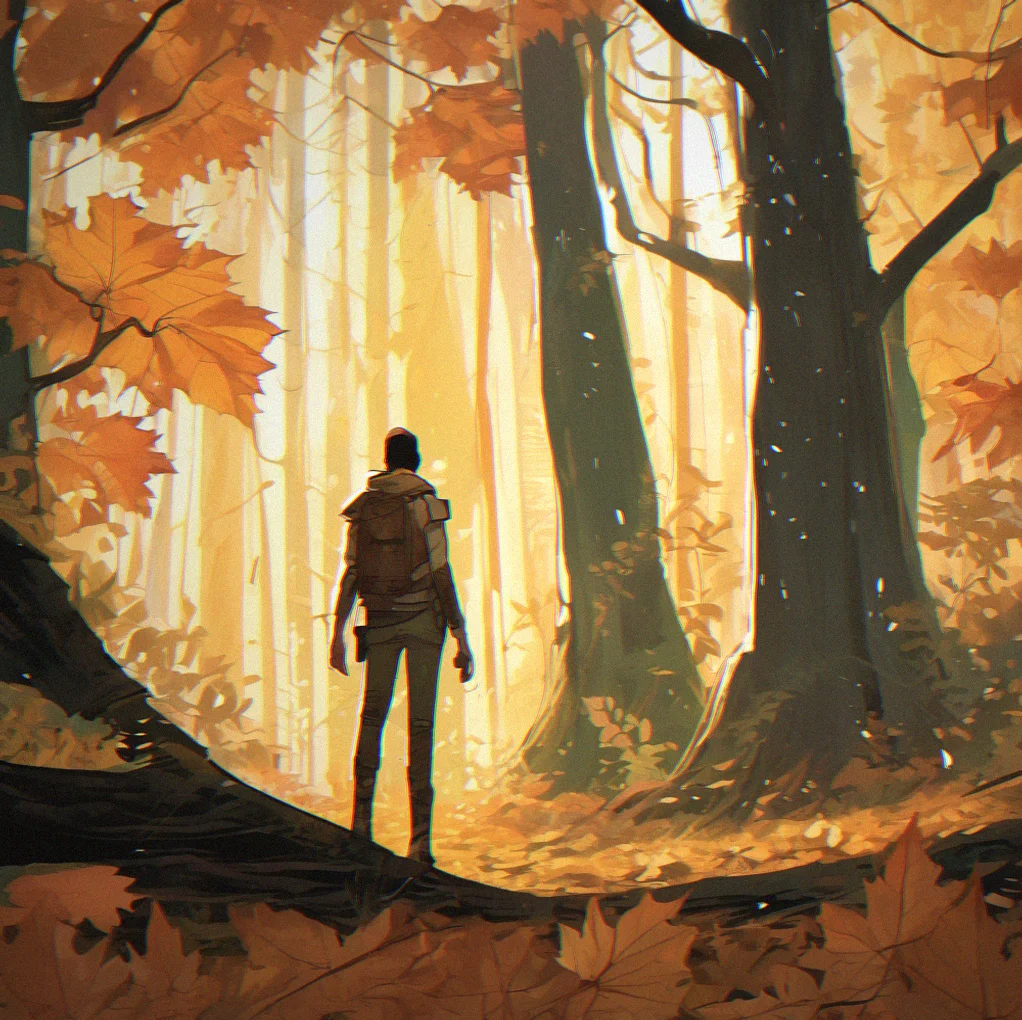
Meditative Exploration
This is about how the walk makes you feel. The way you stop to listen to rain on leaves. You linger in a space because the colors are right. There's a quiet satisfaction in noticing something the forest wanted you to find.
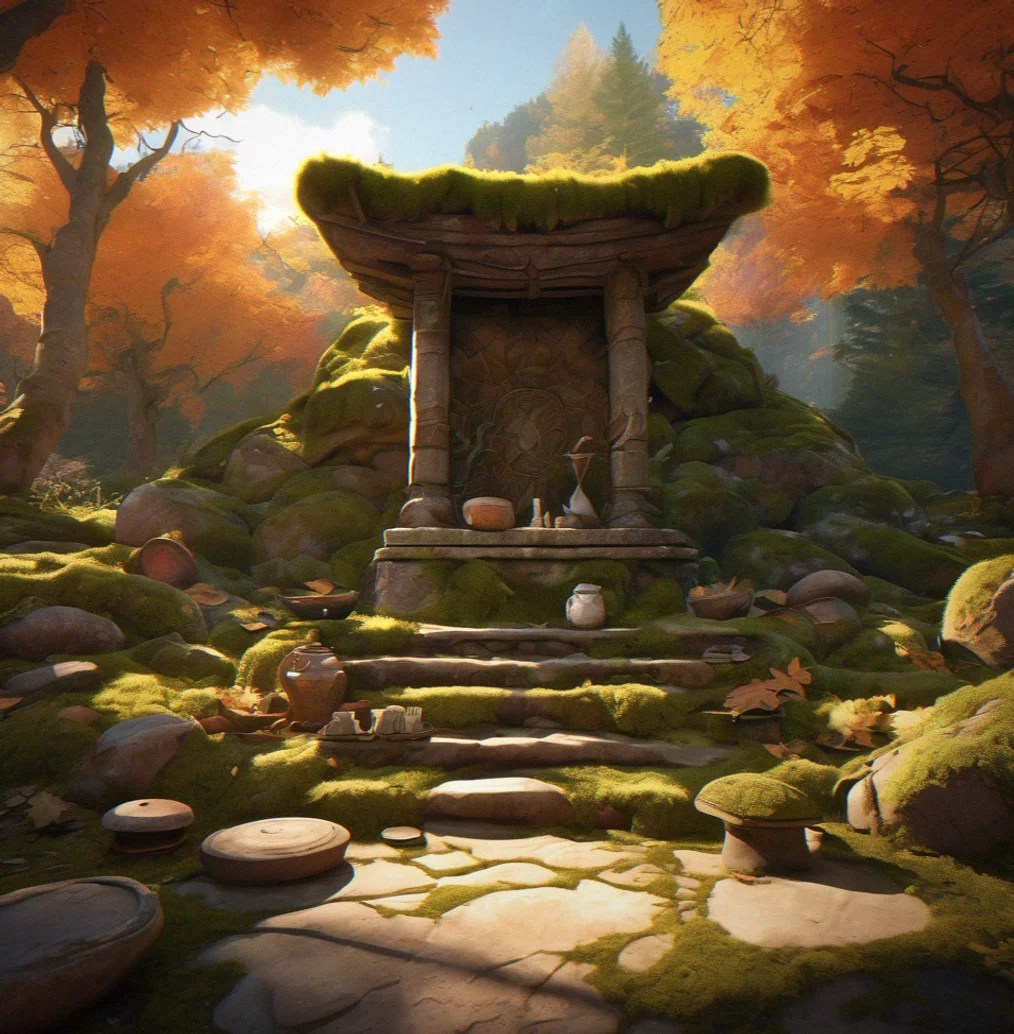
Environmental Storytelling
You don't read plot—you discover it. A shrine tells you who came before. Abandoned tools reveal how people lived. The land itself speaks if you learn to listen.
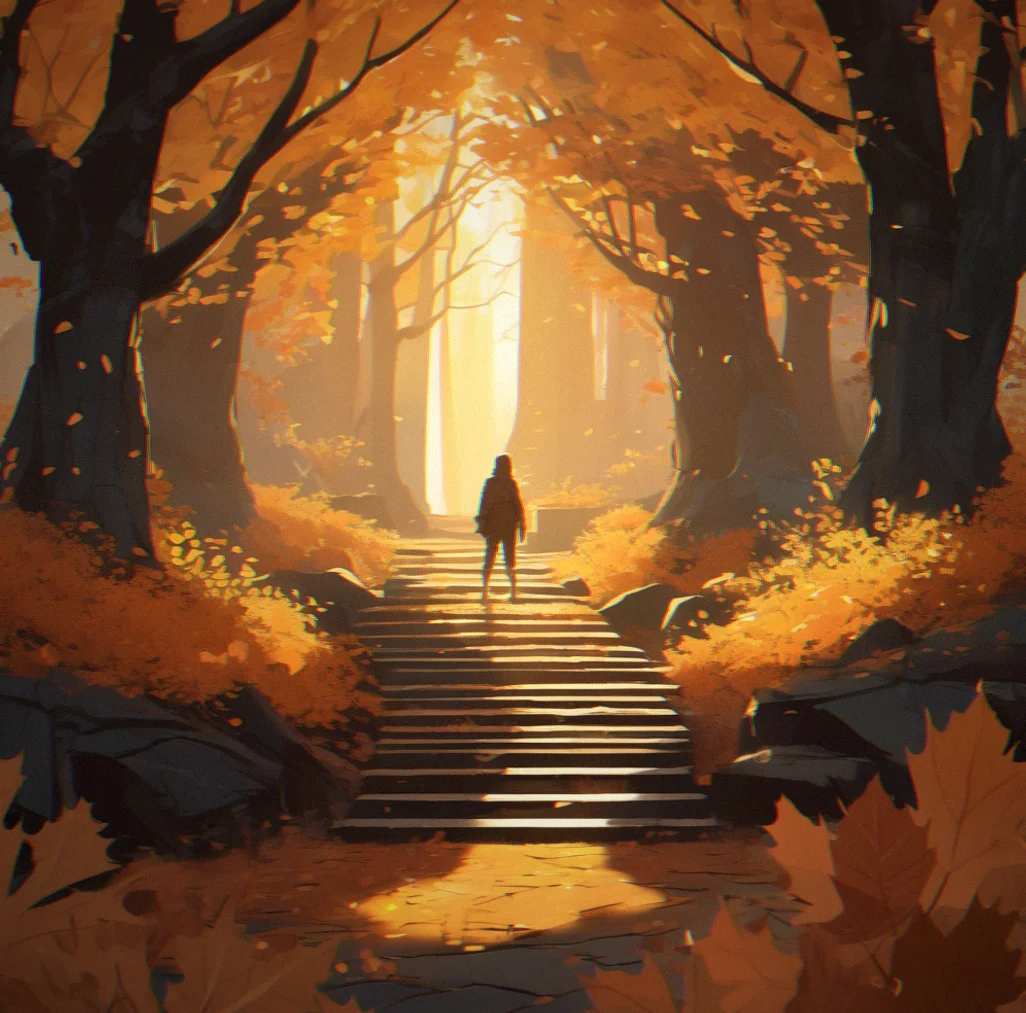
Progression Through Discovery
Unlock new areas by collecting leaves and solving puzzles—but it never feels like grinding. Every leaf has a story attached to it. Every clearing exists for a reason.

A World That Breathes
Not a checklist. A place. Where time moves differently. Where you can sit and feel the weight lift off your shoulders and that's enough. That's everything.
The Forest in Focus
Four snapshots of what you're about to walk into. Raw, no filters, no staging. Just what it actually looks like when you slow down and pay attention instead of rushing past.
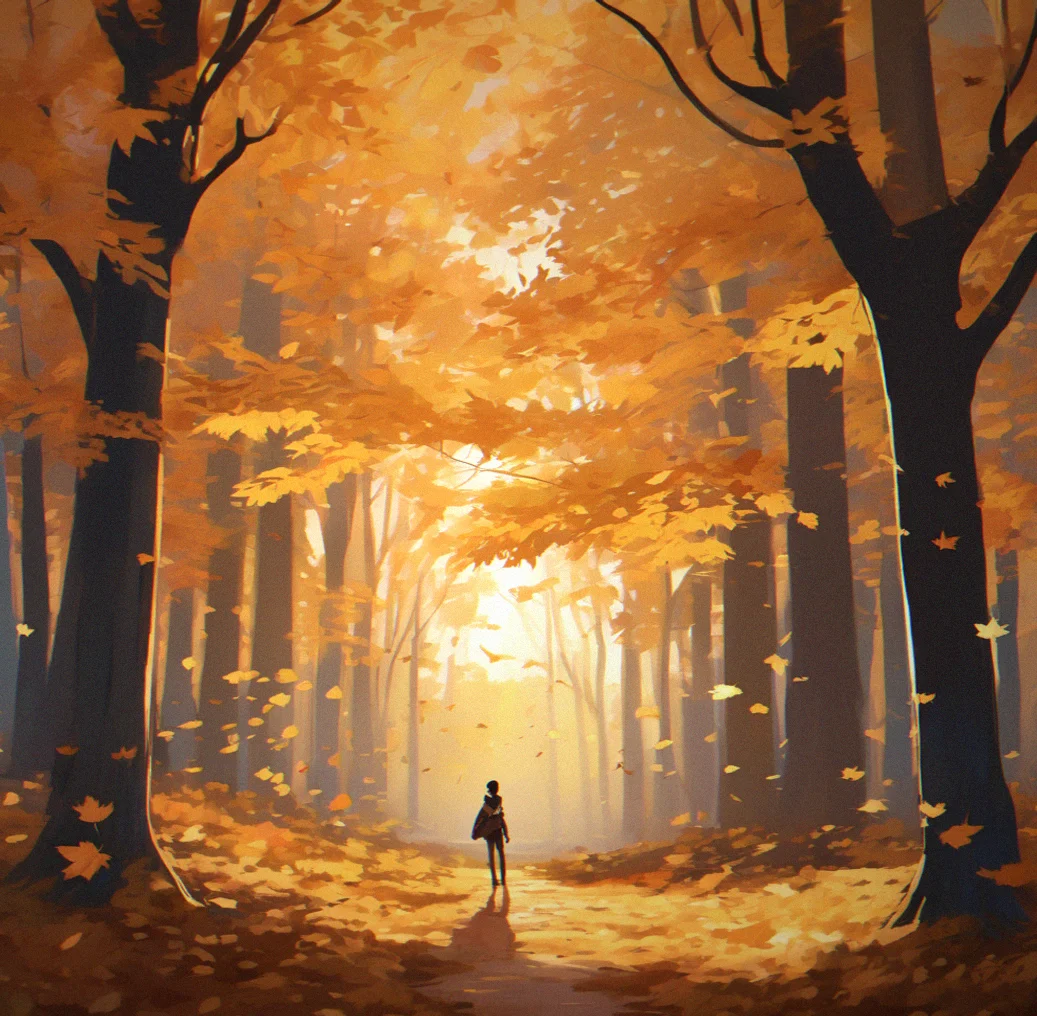
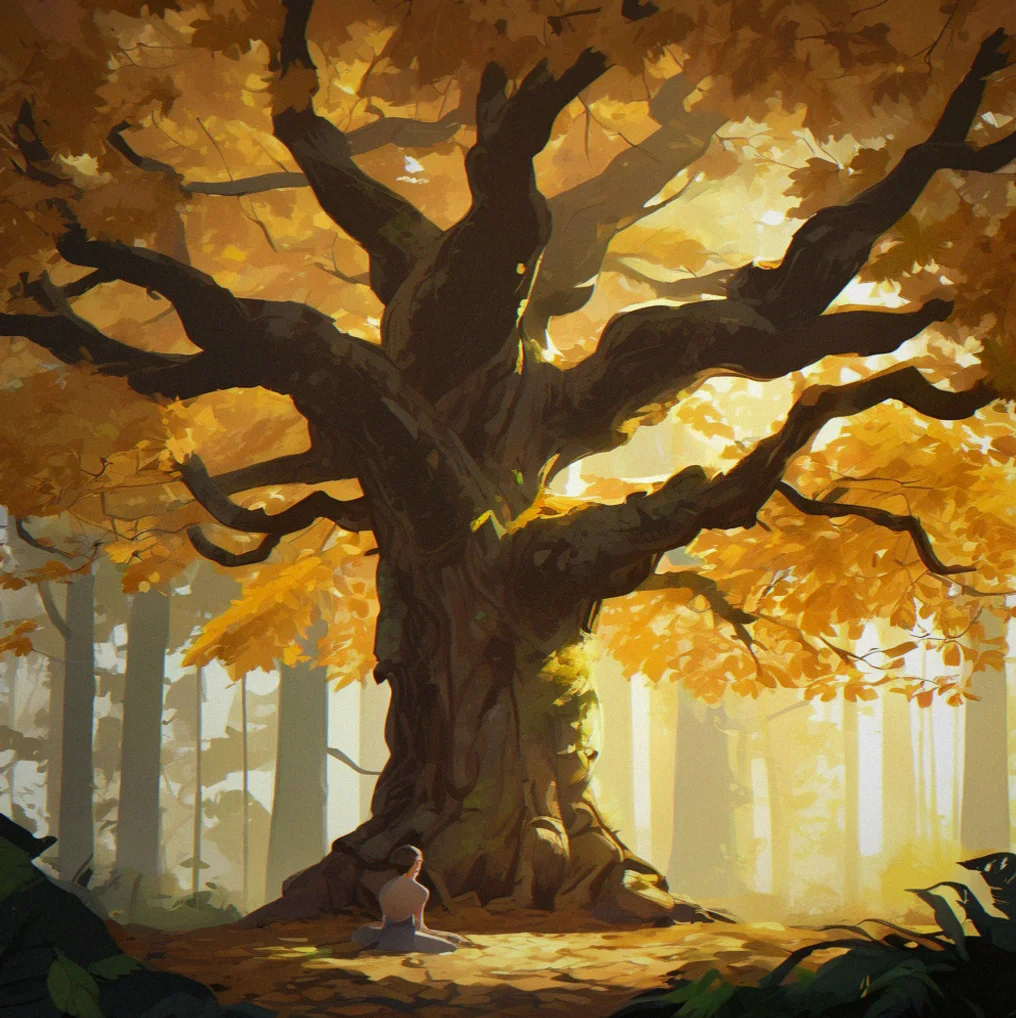
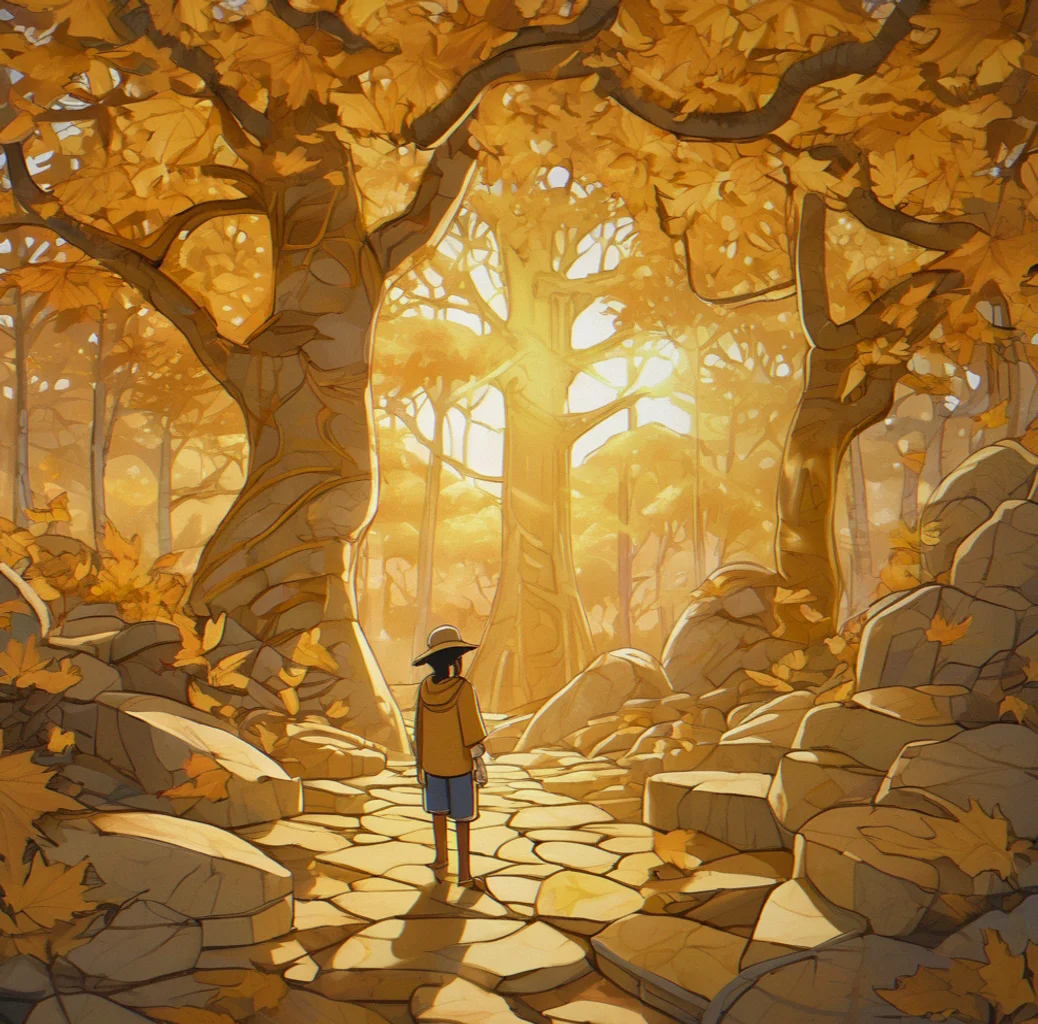
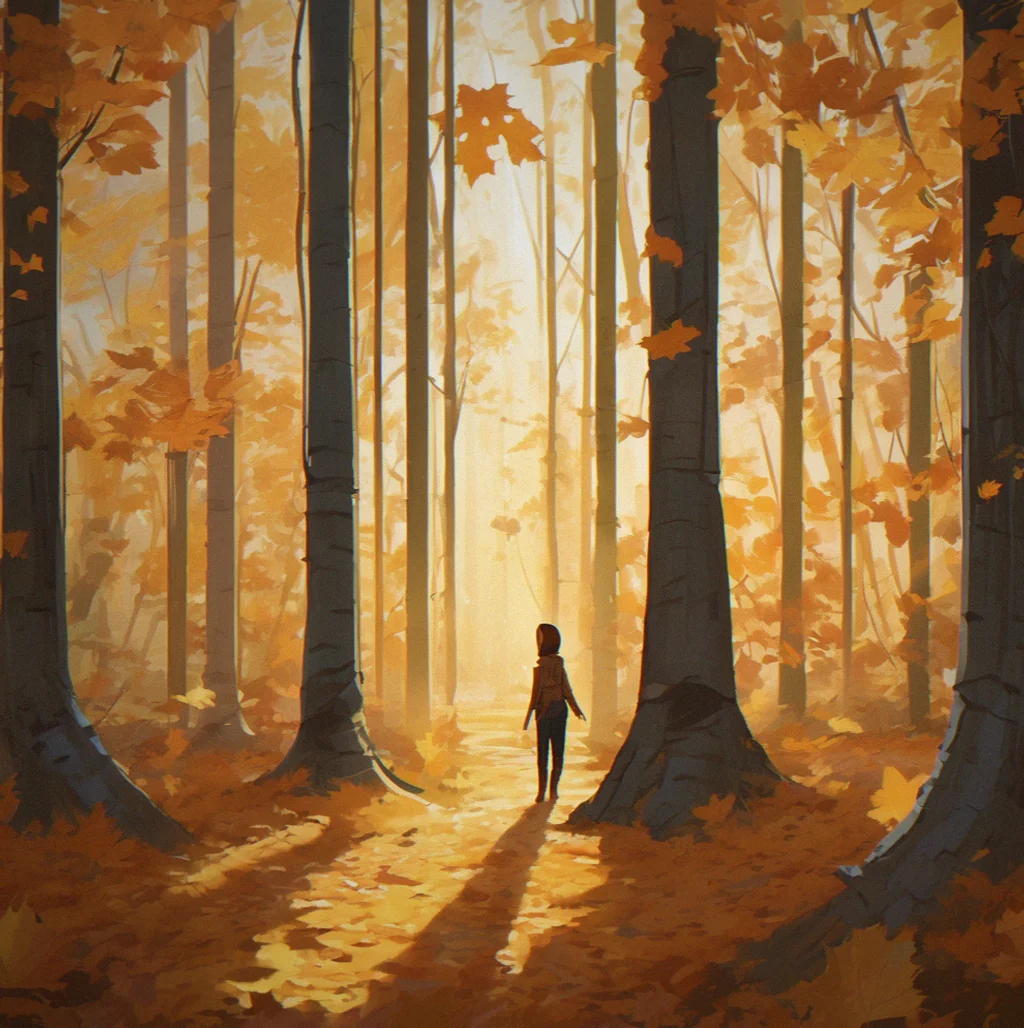
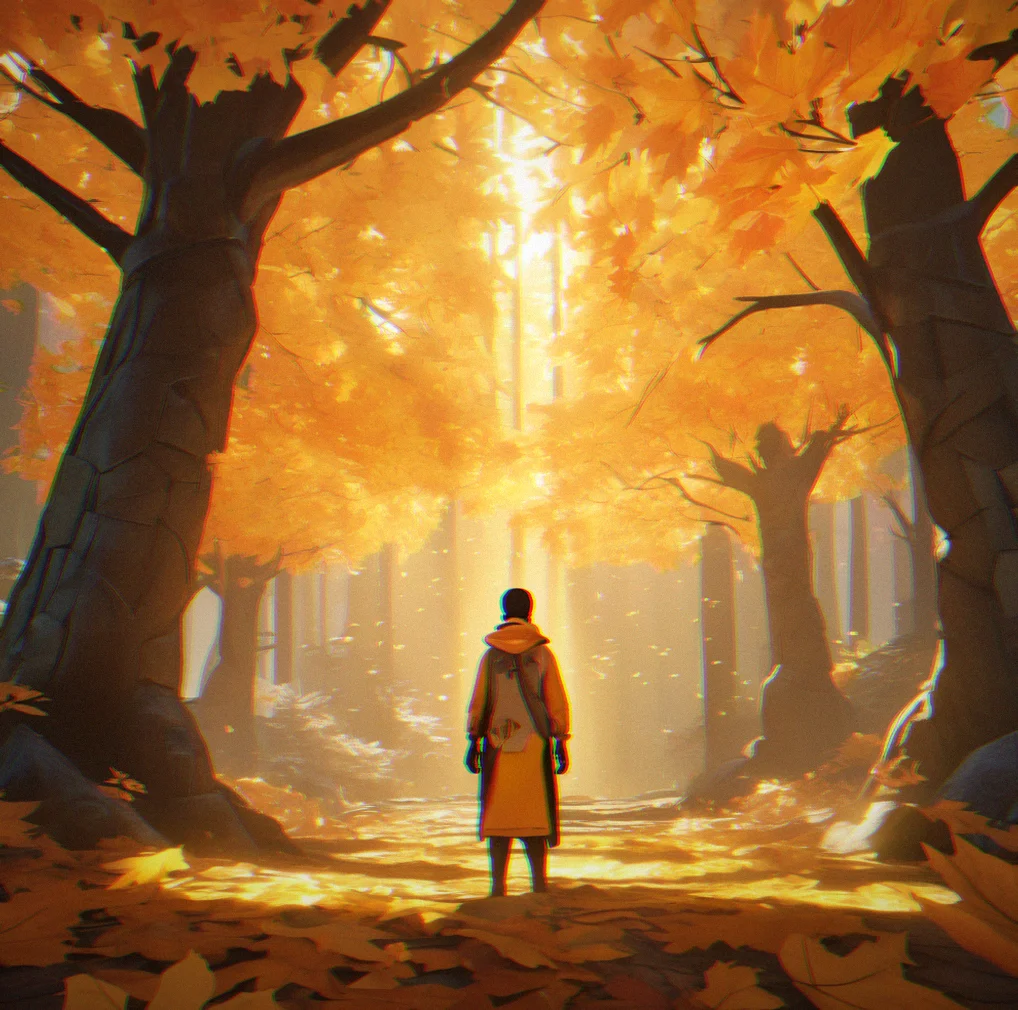
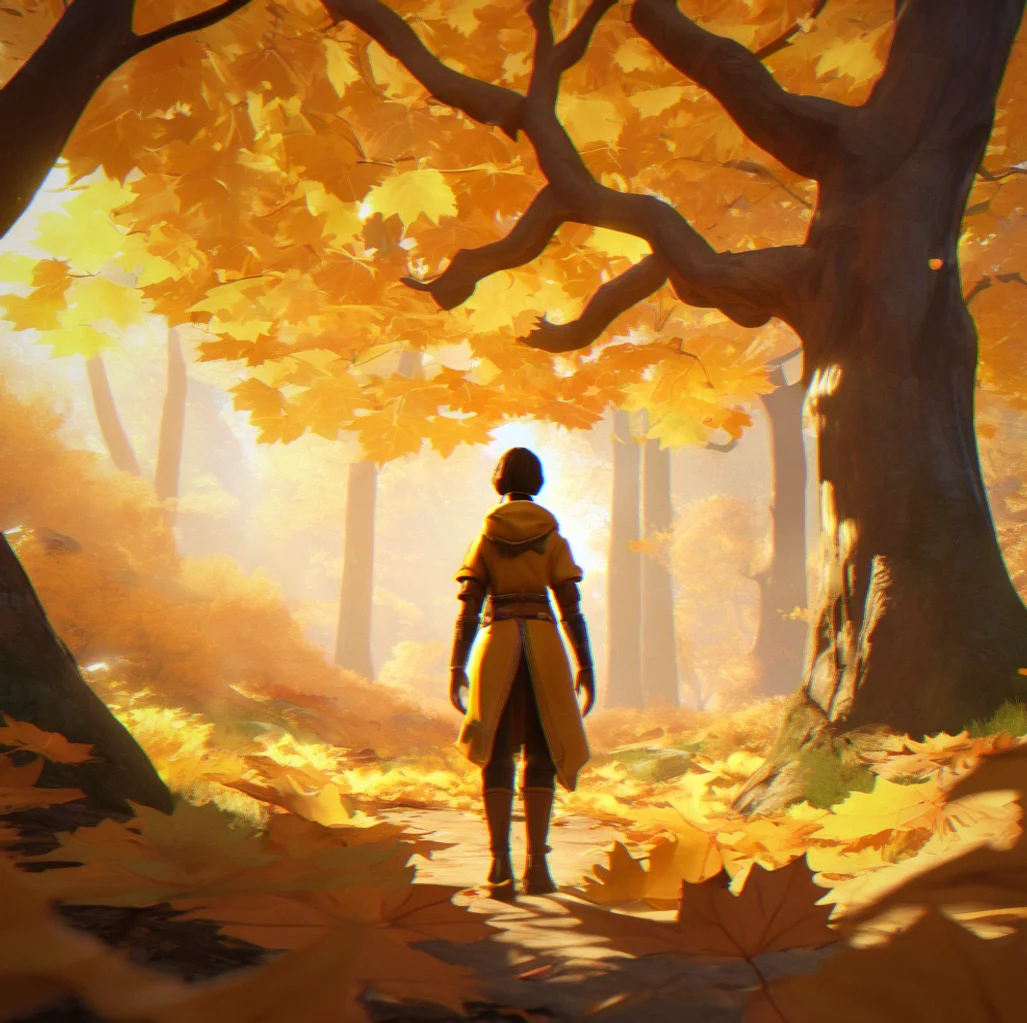
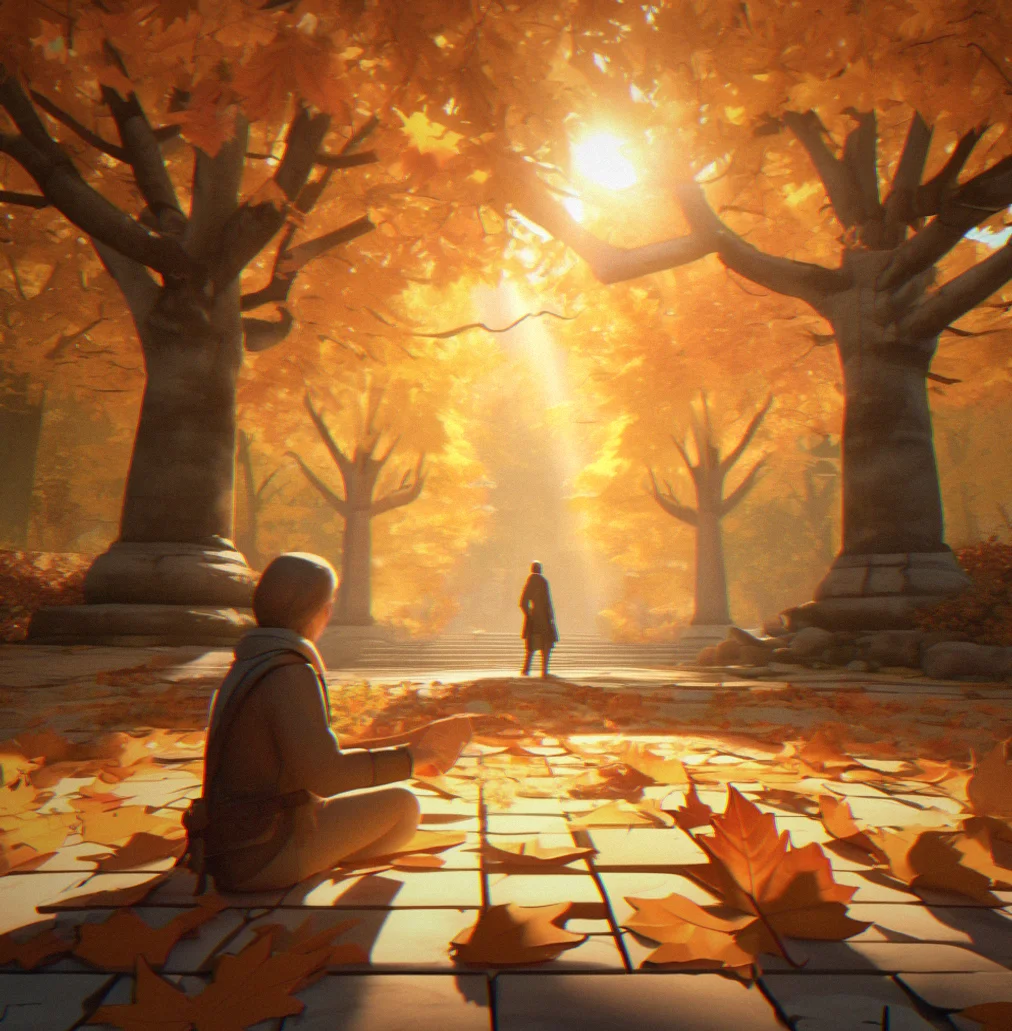
A forest clearing at twilight. Golden light spills through the canopy and catches on scattered maple leaves across the ground
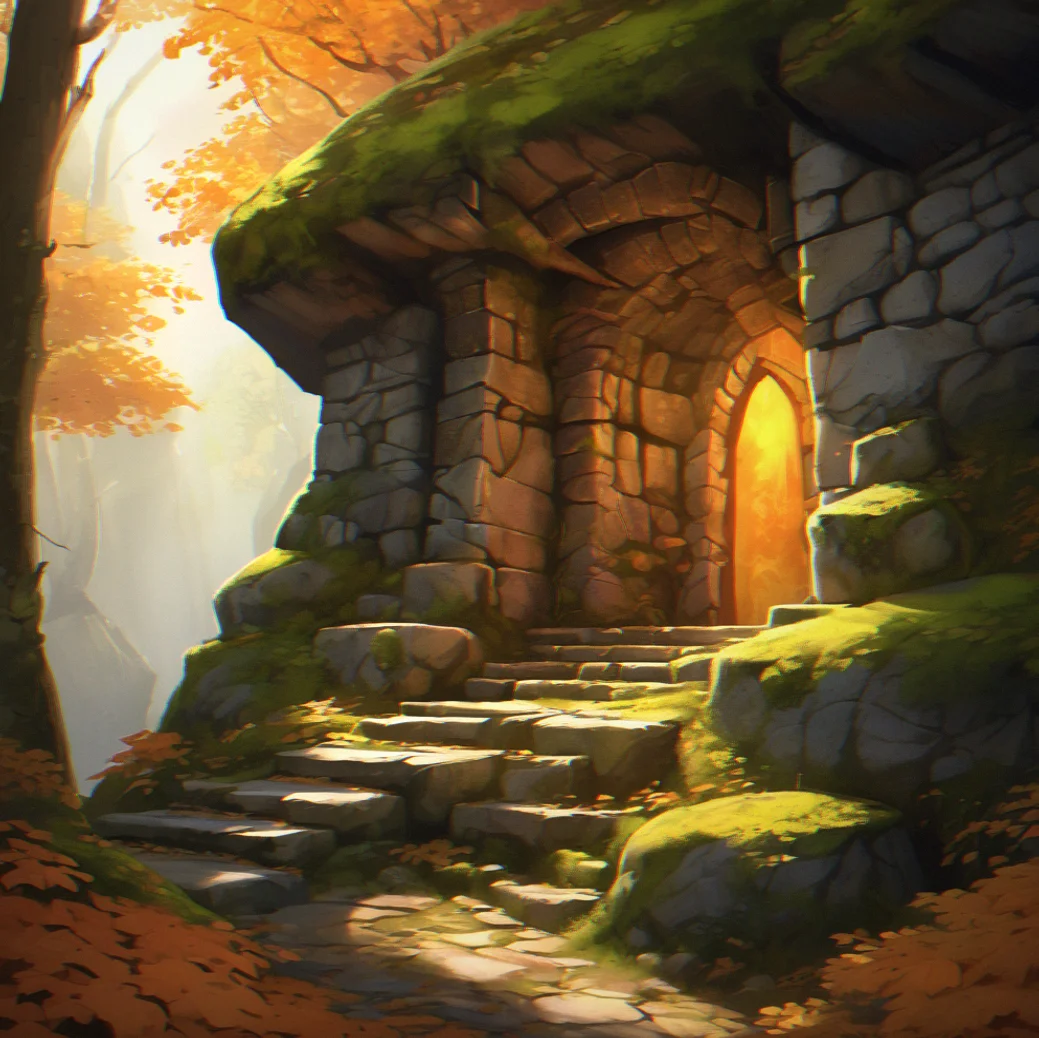
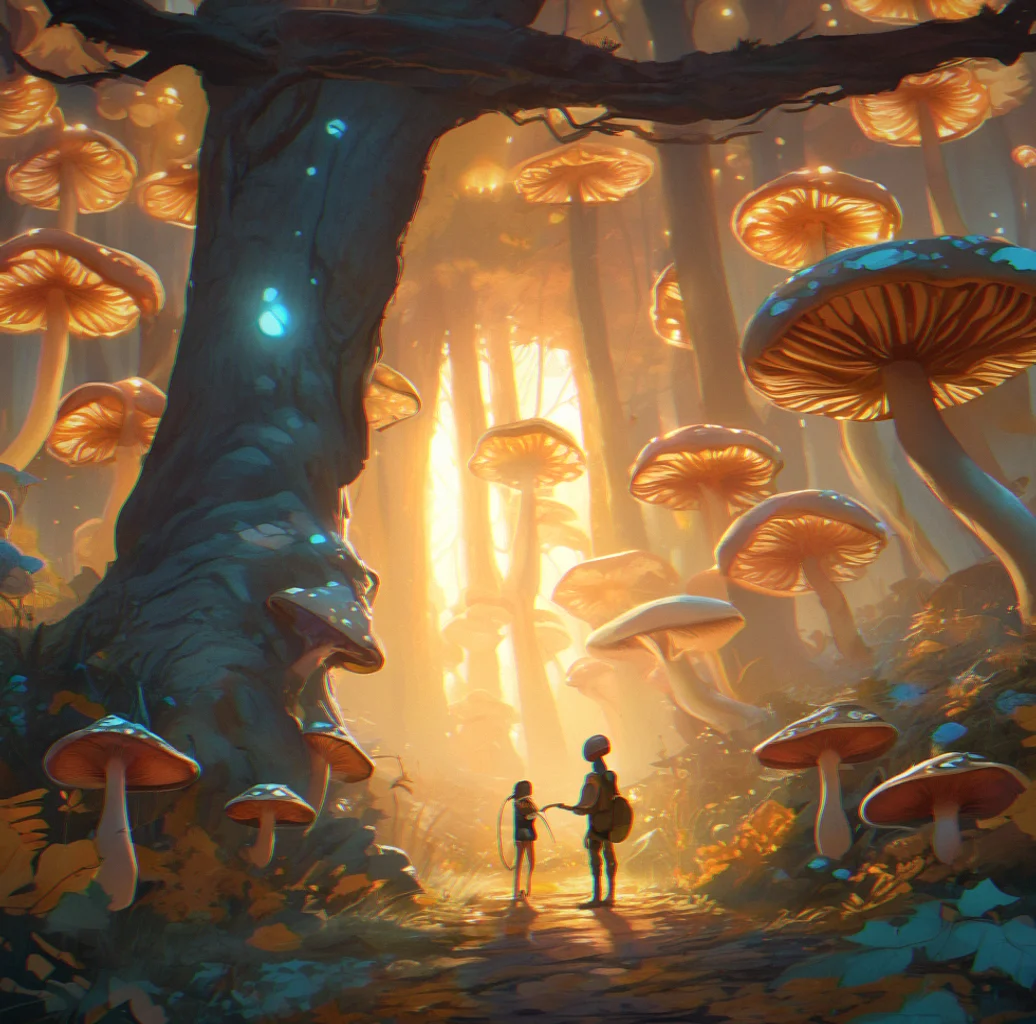
Stone alcove built into the hillside, walls covered in moss, a glowing artifact tucked in the shadows. The kind of place you'd want to spend an afternoon in
Old stone puzzle with interlocking pieces. One of them is lit up, showing you where it goes next
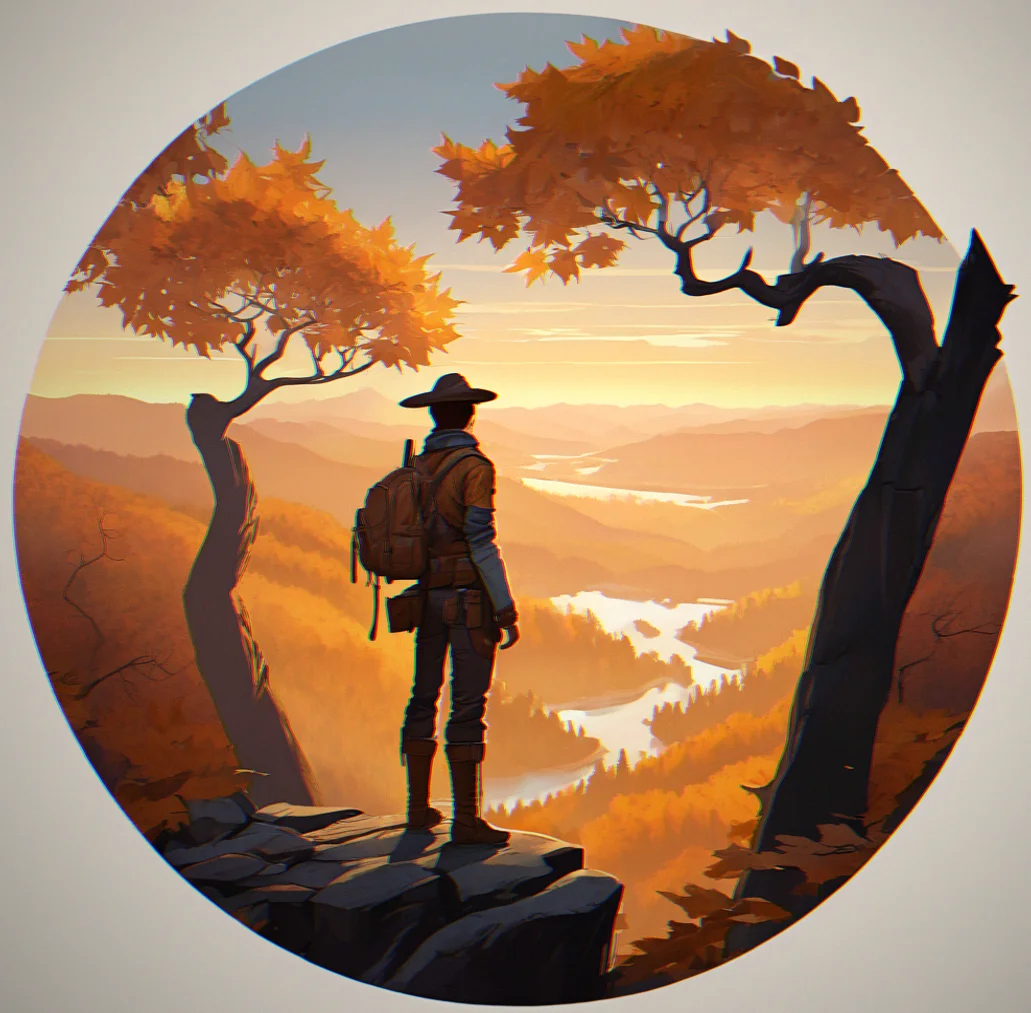
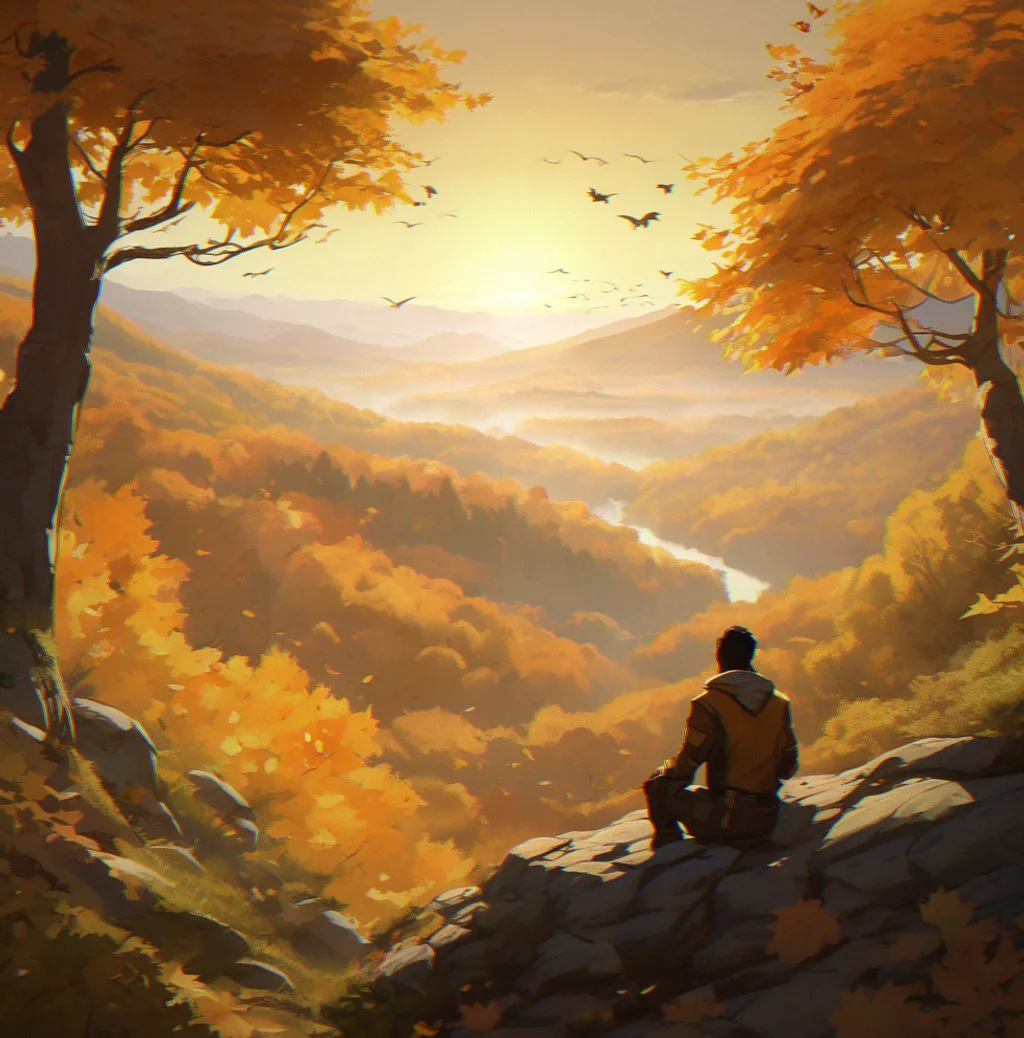
Wide forested valley at dusk. Mist sits between the ridges. Your character stands on an outcrop looking out across it all
Why People Keep Playing
Somewhere between 8 and 20 hours of wandering. No pressure. No endless tasks.

Collecting Feels Like Discovering
This isn't resource farming. You're actually paying attention—to how light hits a leaf, the pattern moss makes, whether a stone is warm. Every glowing maple leaf you pick up anchors a memory of where you've been and hints at what's next. There's something satisfying about realizing you found something that was just sitting there the whole time, waiting.

Puzzles That Feel Conversational
Not riddles. No countdown clocks. These puzzles work like a dialogue—shift a stone and the world responds. Open a door by figuring out what belongs where. So quiet that solving one doesn't feel like victory. It feels like you're starting to understand how things work.

The Walking Matters
Not everything pushes the story forward. Some spaces exist because the light is beautiful there. Some hideaways are tucked away just to be stumbled upon. Spend three hours or thirty minutes—both are fine. The game won't clock you or push you along. You move at whatever pace lets you actually see things.
Before You Start Walking
Most people get through Bright Maple in somewhere between 8 and 15 hours, though if you're someone who likes to linger you might stretch it to 20 or more. Here's what tends to matter before you jump in.
Yeah, totally. Nothing here is a brain-teaser. You're moving stones around, opening gates, figuring out what fits where—that's the level we're talking about. And when you do get stuck, there's usually another way forward. The game doesn't believe in locking you out.
You pick it up from what's around you. A shrine hints at who was there before. Objects scattered about suggest whole lives. But nobody's forcing a backstory down your throat. Some players skip the story stuff entirely and just walk around. Both approaches work fine.
No. You won't run out of time, you can't miss anything, and there's no such thing as a wrong choice. Failure doesn't exist in this world. That's kind of the entire design.
Not really, especially if you're actually looking. Finding them doesn't feel like checking boxes because each one is tucked somewhere—wedged in branches, buried under moss, glowing in spots you have to actually notice. There's a rhythm to it. Purpose. And it's not endless either. You're looking at somewhere between 50 and 60 leaves depending on how you explore.
Both, neither, whatever feels right. Finish one area then stop. Take a break for a week. Come back whenever. The forest doesn't care about your schedule. Some people power through it over a couple weeks. Others play for a few hours one Thursday and disappear for a month. It's still waiting when you get back.